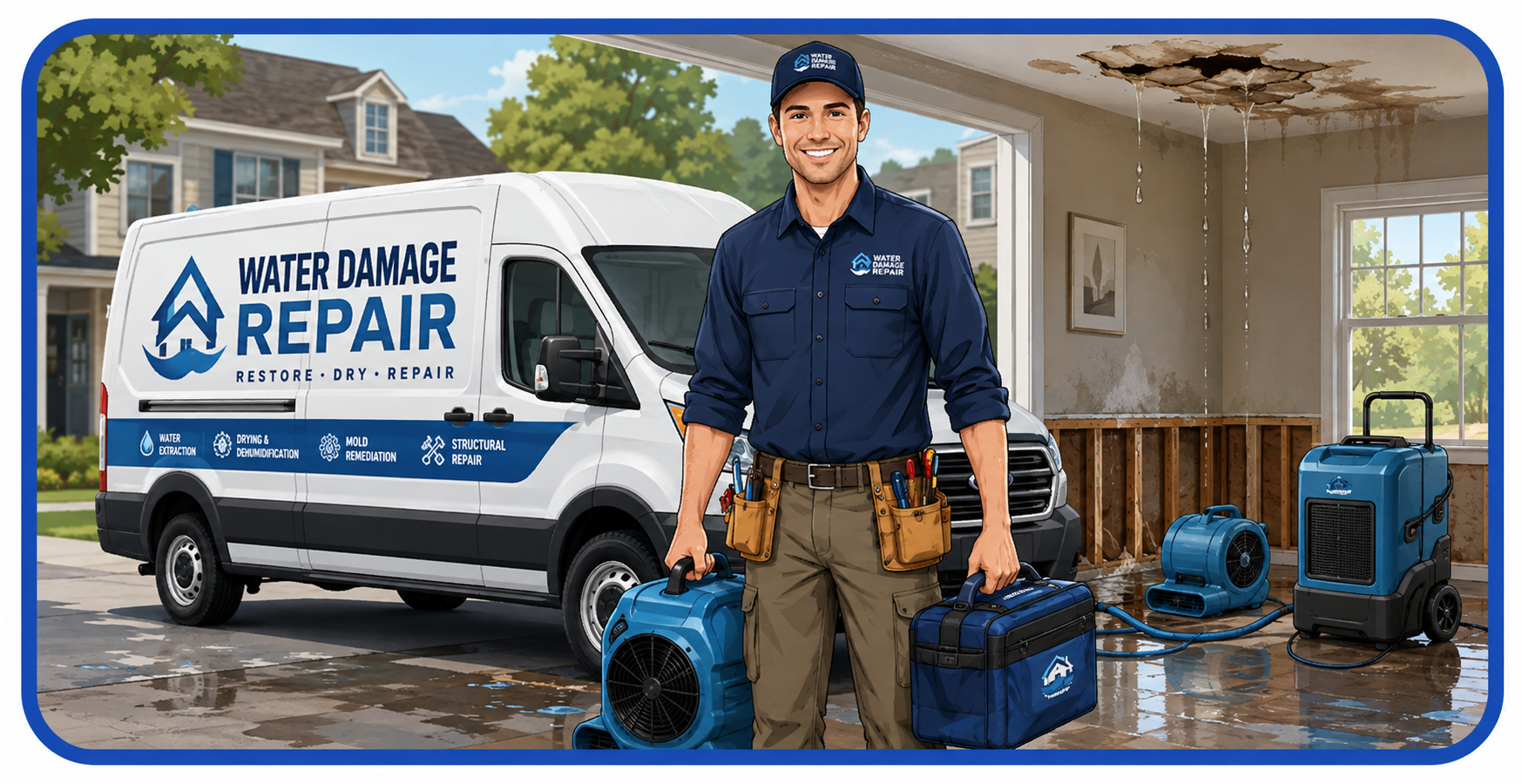
A Micro water damage inspection isn't a walk-through with a flashlight. It's a systematic, instrument-driven assessment that produces a written report showing exactly where the water went, how saturated each affected assembly is, and what needs to happen next.
A credible water damage inspection in Micro does more than identify where the water is visible. It traces where the water went — through structural assemblies, behind finishes, and into below-grade spaces — and produces a written, defensible assessment you can act on or present to an insurance carrier, a buyer, or a remediation contractor.
FLIR infrared thermal cameras detect temperature differentials in structural surfaces — a wet wall cavity cools differently than a dry one during evaporation, making moisture migration visible as a thermal signature even behind intact drywall. Our Micro inspection team uses thermal imaging as the primary tool for tracing water migration paths through wall systems, subfloor assemblies, and ceiling cavities, identifying affected areas before a single pin is driven into a wall.
Thermal imaging shows probable moisture — calibrated moisture meters confirm it. Our Micro inspectors use both pin-type meters (direct reading in framing and structural members) and non-penetrating radio-frequency meters (surface reading through drywall and flooring) to take quantified moisture content readings at all thermal-identified locations. These readings are recorded at labeled sensor points and become the data basis for the written inspection report.
Every COS Water Damage Restoration Micro water damage inspection produces a written report: affected area descriptions, thermal images with annotations, moisture meter readings at labeled sensor points, water category determination (Cat 1/2/3), and a recommended scope of work with priority sequencing. Reports are formatted to be useful to your insurance carrier, a remediation contractor, or a real estate transaction where water damage disclosure is at issue.
Our Micro inspection service covers two distinct use cases that require slightly different approaches: pre-remediation inspection (mapping an active or recent water event for claim documentation and remediation scoping) and pre-purchase or post-remediation verification inspection (confirming whether previous water damage was properly remediated or whether current conditions indicate an ongoing or previous water problem). Both use the same instrument suite and produce the same written report format, but the findings are interpreted differently for each use case.
COS Water Damage Restoration's Micro inspection team covers every structural assembly type, every common water migration path, and every inspection use case encountered in residential and commercial water damage situations in NC.
Active event inspection is the step that prevents under-scoped remediation and missed hidden damage.
Real estate transactions in Micro frequently involve properties with prior water events — disclosed and undisclosed. Our pre-purchase inspection uses thermal imaging and moisture meters to identify active moisture in structural assemblies, staining patterns consistent with prior water intrusion, and the condition of previous remediation. For Micro buyers, this inspection provides either confidence that a disclosed water event was properly handled, or documentation that it was not — giving the buyer negotiating leverage and a clear picture of what additional remediation cost, if any, is warranted.
After a water damage remediation project is completed in a Micro property — whether by COS Water Damage Restoration or another company — a verification inspection confirms that structural drying was completed to standard moisture content levels and that no hidden moisture was left behind. This inspection is requested by property owners who want independent confirmation of completion, by landlords who need documentation before returning a property to tenancy, and by sellers who need to demonstrate to a buyer that prior water damage was fully resolved. Our Micro post-remediation inspection produces a written verification report formatted for real estate and insurance use.
Mold risk assessment in Micro is distinct from air quality testing. We assess structural conditions and visible evidence — not air samples.
Below-grade spaces in Micro properties — crawlspaces, basement areas, and below-slab conditions — are among the most common locations for chronic moisture problems to go undetected. Our Micro below-grade inspection covers crawlspace wood framing moisture content readings at joists and beams, vapor barrier condition and coverage, condensation evidence on structural surfaces, and visual assessment for wood rot, fungal growth, and pest damage associated with chronic moisture. Written findings document the below-grade condition for remediation scoping or real estate disclosure.
Our Micro inspection reports are formatted to the documentation standards that insurance carriers use to evaluate water damage claims in NC.


Call +1-844-499-0972 and describe your situation — active event, pre-purchase, post-remediation, mold concern, or insurance documentation. Our Micro scheduler assigns the appropriate inspection type and confirms your appointment. Most Micro residential inspections are available within 24-48 hours.
Systematic, instrument-driven, fully documented during the on-site session.
You understand what was found before you receive the written report.
The written inspection report — thermal images with annotations, sensor point readings mapped to a floor plan, water category determination, and recommended scope — is delivered within 24-48 hours of the on-site session, formatted for insurance, remediation, or real estate use as appropriate to your situation. We're available to answer adjuster or real estate agent questions about the findings.


"The thermal imaging session was what sold me on how a proper Micro water damage inspection should work. Our inspector traced water migration I never could have guessed at — the event in the utility room had spread moisture into the adjacent storage room wall framing more than twelve feet away. The written report documented all of it and our remediation contractor used it directly to scope the drying project."
"I had noticed a musty smell in a room of my Micro home for months before calling COS Water Damage Restoration. Their inspection found active moisture in the subfloor assembly under an area rug — a slow pipe drip that had been going on long enough to saturate the subfloor significantly without any visible surface evidence. The written report documented the moisture readings, the thermal images showing the extent of the affected area, and the recommended scope. I would never have found this without the thermal camera."
"We manage a portfolio of Micro rental properties and COS Water Damage Restoration's inspection service is what we use every time a water event is reported, prior to any remediation starting. The inspection report maps the damage completely — it's what we give our remediation contractor as the scope of work and what we give our insurer as the damage documentation. Having a consistent, instrument-backed inspection process has eliminated the disputes we used to have about whether remediation was complete or whether the damage scope matched what we claimed."
COS Water Damage Restoration's certified inspection team serves Micro and surrounding communities throughout NC. Call +1-844-499-0972 to schedule your Micro inspection.
Whether you need inspection for an active event, a purchase, or post-remediation verification — our Micro team produces a written, instrument-backed report. Call +1-844-499-0972 to schedule.
📞 Call +1-844-499-0972 — Schedule Micro InspectionIICRC Certified · FLIR Thermal Imaging · Written Reports · Micro, NC